
Cluster: Games & Sports Foundations | Content Type: Industry Insight | Domain: businessinnovation.site/
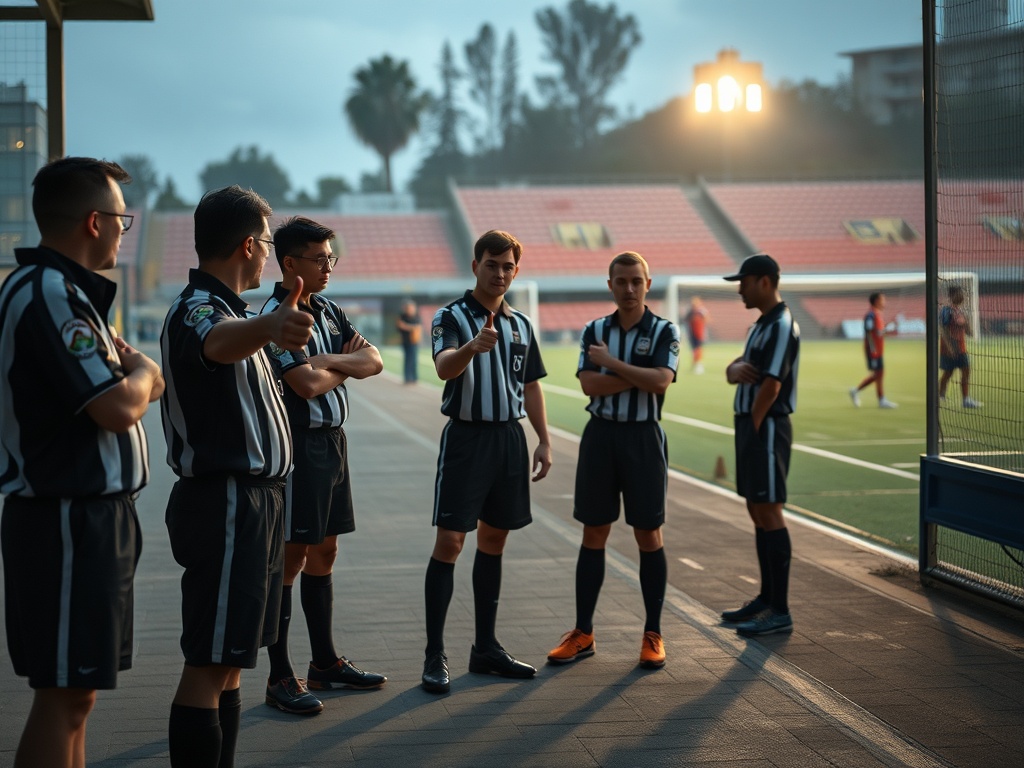
Officials influence games by applying rules, managing safety, and making judgment calls under pressure. They do not decide outcomes by preference, but their positioning, communication, and interpretation can shape how fairly and smoothly a contest unfolds.
Officiating Snapshot
A good official keeps the contest legal, safe, and consistent. Beginners should watch not only the call itself, but also the official’s angle, timing, rule responsibility, and how the call changes the next phase of play.
What “official” means across sports
In plain language, an official is the neutral person or crew assigned to enforce the rules of a game. The title changes by sport: referees are common in soccer, basketball, hockey, and combat sports; umpires appear in baseball, softball, cricket, and tennis; judges score execution-based events such as gymnastics, diving, and boxing; line judges, assistant referees, scorers, timekeepers, and replay officials support specific decisions.
The National Federation of State High School Associations describes officials as essential to organized competition because they provide impartial rule enforcement and help protect the structure of the game through consistent decisions. New fans can use that idea as the simplest starting point: without officials, a serious contest becomes a scrimmage with no trusted arbiter. See the NFHS explanation of why sports officials matter for a broader view of the role.
Four ways officials affect outcomes without “choosing” a winner
Officials influence outcomes in ways that are real but often misunderstood. A foul called early can change how aggressive defenders play. A strike zone in baseball can alter swing decisions. A holding call can erase a touchdown. A judge’s scoring standard can reward clean execution over risky difficulty. None of these examples proves bias. They show that rule application is part of the contest, just as weather, fatigue, coaching, and equipment are part of the competitive setting.
The key distinction is fact versus interpretation. A ball crossing a boundary line is usually a factual decision. Advantage in soccer, pass interference in football, charging in basketball, and subjective scoring in judged events require interpretation. Fans become better viewers when they understand which category they are watching.
Common decisions beginners notice first
| Decision type | Sports where it appears | Why it changes the game |
|---|---|---|
| Boundary calls | Tennis, soccer, basketball, volleyball | Possession, points, or field position can change immediately. |
| Fouls and penalties | Football, basketball, soccer, hockey | Players may adjust physicality and coaches may change tactics. |
| Scoring judgments | Gymnastics, diving, combat sports | Execution standards decide margins when no simple score exists. |
| Time and clock rulings | Basketball, football, hockey | Late-game possessions and restart choices can be decisive. |
How positioning shapes accuracy
Many calls depend on angle. An official screened by players may see a collision differently from an official with a clear lane. That is why officiating systems use crews, zones, diagonal movement patterns, and assistants. The best officials are not guessing from the loudest reaction; they are trying to see the relevant body contact, boundary, release point, or sequence from the assigned angle.
This also explains why fans watching on television sometimes feel certain after a replay while the on-field official had only one real-time view. Replay can help in some competitions, but leagues limit replay to preserve pace and because not every judgment can be reduced to a freeze-frame.
Beginner misunderstandings that cause frustration
A common mistake is assuming every missed call is proof of favoritism. Officials miss calls because the game is fast, bodies block sightlines, and some rules require judgment. Another mistake is treating all sports the same. A referee in basketball calls contact based on advantage and displacement; a baseball umpire evaluates a pitch within a strike-zone standard; a gymnastics judge scores execution and difficulty under a code.
A third misunderstanding is ignoring consistency. One borderline call rarely defines fairness. A better question is whether similar actions are treated similarly for both sides throughout the contest. This is where experienced fans separate ordinary human error from a genuinely uneven standard.
How players and coaches adapt
Teams adapt to officiating the way they adapt to opponents. If a soccer referee allows physical shoulder challenges, players may compete more aggressively for loose balls. If a basketball crew calls hand checks tightly, guards may attack the lane more often. If a baseball umpire gives the low strike, pitchers may work downward and hitters may protect earlier.
For readers building foundational sports literacy, this connects naturally to how athletes understand their roles because players need to know not only their job in a system, but also how to adjust when the rule environment changes during a game.
Respecting officials while still analyzing calls
Fans can analyze decisions without attacking the people making them. A useful approach is to ask three questions: what rule was involved, what did the official likely see, and what was the consequence? That keeps the conversation grounded in the game instead of turning every disagreement into a claim about motives.
Parents and new players should also learn basic etiquette. Arguing constantly can distract young athletes and make the sport less enjoyable. For young children just entering organized play, a gentle foundation matters more than perfect rule mastery, which is why a guide to sports for preschoolers should focus on fun, safety, listening, and simple boundaries first.
A fair way to judge the call after the game
After the final whistle, the most useful review is not “Was I angry?” but “What standard was applied?” Look for the rule, the official’s view, and whether the same type of action received the same response later. This approach also keeps analysis honest when a call benefits the team you support. Fairness should not depend on which jersey you like.
What This Means for Smarter Viewing
Officials are part of the competitive environment, not outside it. Their work affects tempo, risk, strategy, and scoring, but that influence is grounded in rules, positioning, and judgment rather than personal preference.
The next time a controversial call happens, pause before reacting. Identify the rule, the official’s angle, and the type of decision. That habit makes games easier to understand and discussions more fair.