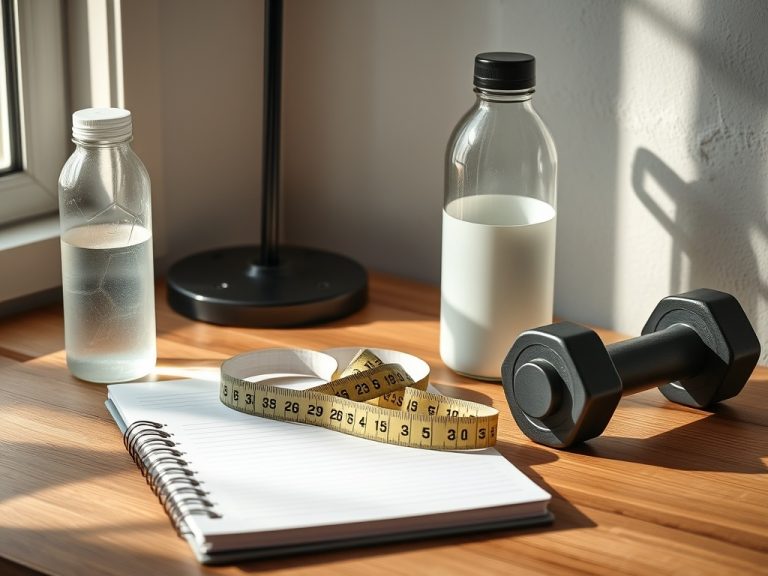
You can build muscle at home with limited equipment when the exercises are challenging, repeated consistently, and progressed over time. The key is not owning a full gym; it is creating enough mechanical tension, controlling technique, and tracking small improvements.
Home Strength Takeaways
- Muscle gain needs progressive challenge, not necessarily expensive machines.
- Adjust tempo, range of motion, pauses, and single-limb variations before buying more gear.
- Two to four focused weekly sessions can be enough for many beginners and intermediates.
- Pain, poor form, and constant soreness are signs to scale back or seek coaching.
Why Limited Equipment Can Still Be Enough
A home plan works when the target muscles face a demand they are not yet fully adapted to. That demand can come from dumbbells, resistance bands, a loaded backpack, slow lowering phases, pauses, higher repetitions, or harder leverage. A push-up with clean depth and control can be more useful than a rushed machine press with little focus.
Resistance training is part of broad adult activity guidance, and professional organizations such as ACSM describe it as a key health-supporting habit. The practical interpretation is simple: train major movement patterns, repeat them with care, and let the difficulty rise gradually.
Home training also pairs well with a clear cardio plan. If you are unsure how to blend lifting with conditioning, use a weekly rhythm that separates demanding leg work from harder cardio days rather than stacking everything into one exhausting block.
The Home Muscle-Building Framework
Build the routine around six patterns: squat or lunge, hip hinge, push, pull, core resistance, and loaded carry or bracing. Without a pull-up bar or cable, pulling can be handled through band rows, towel rows around a stable post, dumbbell rows, or backpack rows. Lower-body work can become harder through split squats, slow step-downs, single-leg bridges, and Romanian deadlifts.
Choose two to four sets per movement and stop most sets with one to three good repetitions still available. That effort level is challenging enough for many people without turning every set into a form breakdown. Over time, progress by adding reps, slowing tempo, improving range, adding load, or choosing a harder variation.
Nutrition does not need to be complicated, but muscle repair depends on total eating patterns. Practical snack planning can help people avoid training hard while unintentionally under-fueling, especially when workouts are squeezed between work and family duties.
| Home Tool | Best Use | Progression Method |
|---|---|---|
| Resistance bands | Rows, warm-ups, presses, assisted movements | Use heavier band or slower tempo |
| Dumbbells or backpack | Squats, hinges, presses, carries | Add load or reps gradually |
| Bench, chair, or step | Split squats, step-ups, incline push-ups | Increase range or reduce assistance |
Equipment That Earns Its Space
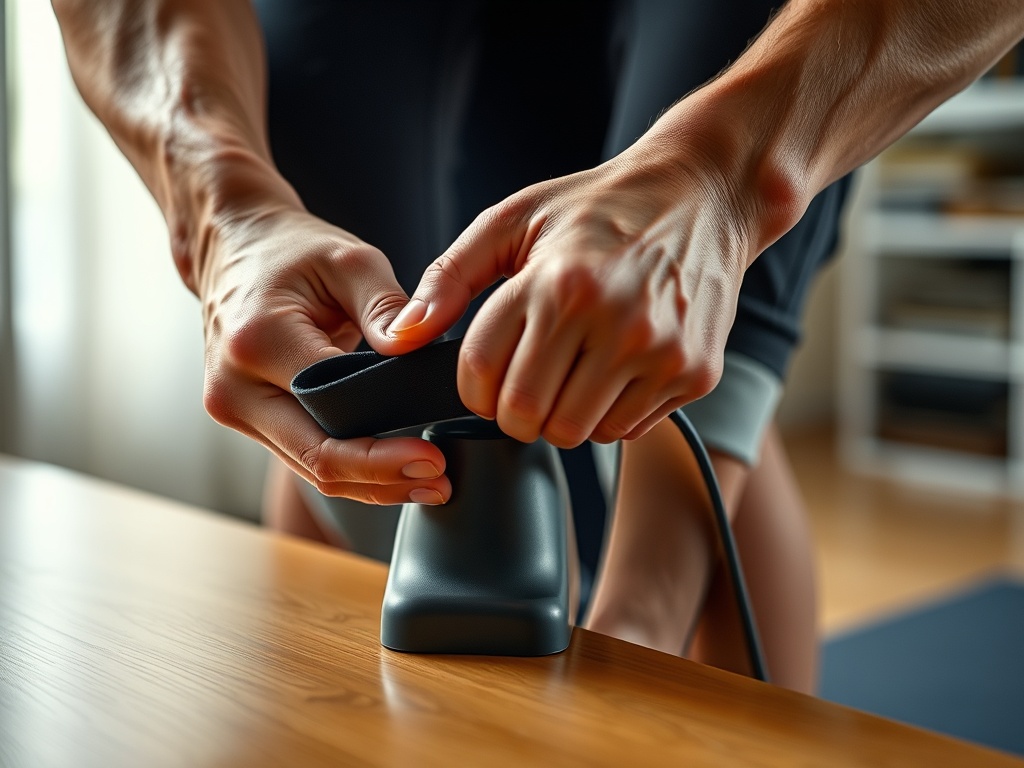
If you can buy only one or two items, adjustable dumbbells, resistance bands, a sturdy bench or step, and a pull-up option usually offer more value than novelty equipment. Bands are useful for rows, presses, warm-ups, and assisted range-of-motion work. Dumbbells make progression easier because load can be increased in smaller steps.
A mat is helpful for comfort but does not create progression by itself. A foam roller can support warm-ups or recovery routines for some people, yet it should not replace strength work, sleep, or a sensible plan.
Errors That Keep Home Workouts Too Easy
The most common problem is doing the same comfortable circuit for months. Repeating a routine is useful only when the target gradually moves. Another issue is collecting exercises without testing whether they train the intended muscle. If the lower back is the only thing you feel during a hinge, reduce range, practice slower, or choose a supported version.
Avoid judging quality by sweat alone. A hot room, short rest, and fast transitions can create fatigue without delivering enough muscular tension. For hypertrophy-focused work, controlled reps and clear progression usually matter more than making every session feel frantic.
When to Make the Plan More Advanced
Scale up when you can complete the top of your rep range with stable form, normal breathing, and no joint irritation. Add a set to one or two priority movements, increase load, or move to a more demanding variation. Change only one main variable at a time so you can identify what helped.
A reasonable next step is to run one four-week block and track exercises, reps, load, and perceived effort. If progress is flat across several movements, review sleep, food intake, total stress, and recovery before assuming home training has failed.
Four-Week Progression Without a Gym
For the first week, choose movements you can perform with control: split squats, hip hinges, push-ups, rows, and carries. Keep a written record of reps and effort. If you cannot repeat the same setup next week, you will not know whether you improved or simply changed the test.
During week two, keep the exercises stable and add a small challenge. That might mean one extra rep per set, a slower lowering phase, a two-second pause at the hardest point, or a slightly heavier backpack. The change should be visible in the log but not so large that form collapses.
In week three, choose one priority lift for extra attention. For example, add a third set to rows if posture and pulling strength matter, or add a controlled single-leg variation if lower-body training has become too easy. The rest of the routine can stay steady so recovery remains predictable.
By week four, evaluate what equipment would genuinely remove a limitation. Buy a heavier band, dumbbell, or pull-up solution only if the current version no longer creates enough challenge. This keeps home training practical instead of turning it into a collection of unused tools.
How to Know Effort Is High Enough
Home workouts fail when every set ends far before the muscles are challenged. A useful set usually slows down near the end while form stays stable. You should feel that more repetitions are possible, but not many. That balance gives the muscle a reason to adapt without turning each set into a risky grind.
Keep a few performance anchors. Test push-ups, rows, split squats, and hinges under the same conditions every few weeks. If repetitions, range, or control improve, the plan is probably working even before visible muscle changes are obvious.
Rest times should match the goal. For muscle and strength, resting long enough to perform the next set well is better than rushing to stay sweaty. Conditioning can be trained separately instead of being forced into every lifting session.
A Final Check Before Adding Complexity
Before adding advanced methods, confirm that the basics are consistent: enough weekly sets, challenging effort, stable technique, food that supports training, and adequate recovery. Drop sets, supersets, and complicated splits are less important than repeating quality work long enough for the body to respond.