Poor garden soil is usually improved most effectively by correcting a specific limitation rather than adding a little of everything. Start with a soil test, identify whether the real problem is low organic matter, compaction, drainage, pH, or nutrient imbalance, and then choose an amendment that addresses that condition.
TL;DR Start with a soil test. Compost is the most broadly useful amendment for many garden beds because it adds organic matter and can improve water and nutrient management, but lime, sulfur, manure, gypsum, and other materials should be used only when the soil and crop needs justify them.
What Makes a Garden Bed “Poor”?
A bed may look unproductive for several different reasons. Heavy clay can stay wet and resist root growth. Very sandy soil may drain so quickly that water and nutrients move beyond shallow roots. Compacted soil can contain plenty of nutrients yet still restrict air and water movement. A pH that is too high or too low for the plants being grown can also reduce nutrient availability.
That is why appearance alone is a weak basis for choosing amendments. A laboratory soil test gives you a more useful starting point. The University of Minnesota Extension’s soil-testing guidance explains how test results can guide fertilizer, compost, manure, and pH decisions. If the bed has struggled for several seasons, testing before adding more material can also prevent the buildup of nutrients that are already abundant.
A practical assessment should include four questions:
- Does water pond after rain or disappear almost immediately?
- Is the soil hard to push a trowel into when it is moderately moist?
- Does the surface crust or crack?
- Are plants showing persistent weak growth despite appropriate light and watering?
These observations do not replace a test, but they help connect the report to what is happening in the bed.
Match the Amendment to the Soil Problem
| Amendment | Best fit | Main caution |
|---|---|---|
| Finished compost | Low organic matter, weak structure, sandy or compacted beds | Too much can raise nutrient or salt levels over time |
| Composted manure | Organic matter plus nutrients when testing shows a need | Nutrient content varies; repeated heavy use may over-supply phosphorus |
| Leaf mold or well-rotted leaves | Improving moisture retention and soil texture | Nutrient contribution is modest and decomposition takes time |
| Lime | Raising pH when a soil test recommends it | Applying without testing can push pH too high |
| Elemental sulfur | Lowering pH in suitable soils when recommended | Works gradually and must be used according to test guidance |
| Gypsum | Specific calcium or sodic-soil situations | Not a universal fix for clay or compaction |
Compost Is the Broadest Starting Point
Finished compost is often the most versatile amendment because it adds decomposed organic material rather than trying to force a single chemical change. University of Minnesota Extension notes that compost can help sandy soil hold moisture and nutrients while improving drainage in heavier soil; its home composting resource also explains what belongs in a healthy compost system.
For a bed that simply feels tired, crusted, or low in organic matter, a modest layer of mature compost incorporated into the upper soil or left as a surface dressing can be more sensible than repeated applications of concentrated fertilizer. The goal is not to turn the bed into pure compost. Soil still needs a stable mineral fraction, pore space, and balanced nutrient levels.
For related planning, the site’s guide on watering container plants during heat waves shows why water-holding capacity matters when roots are confined or conditions are hot.
Manure Can Help but Requires Restraint
Composted manure contributes organic matter and plant nutrients, which can make it useful when testing indicates a nutrient need. The drawback is variability. Manure-based composts may add substantial phosphorus, salts, or other nutrients, and repeated applications can create imbalances even when plants initially respond well.
If manure is part of your amendment plan, use a fully composted product suitable for garden use and follow local extension guidance for food crops. Avoid assuming that “natural” means unlimited. A soil test every few years is especially useful in beds that receive manure or rich compost repeatedly.
Leaf-Based Amendments Improve Texture Gently
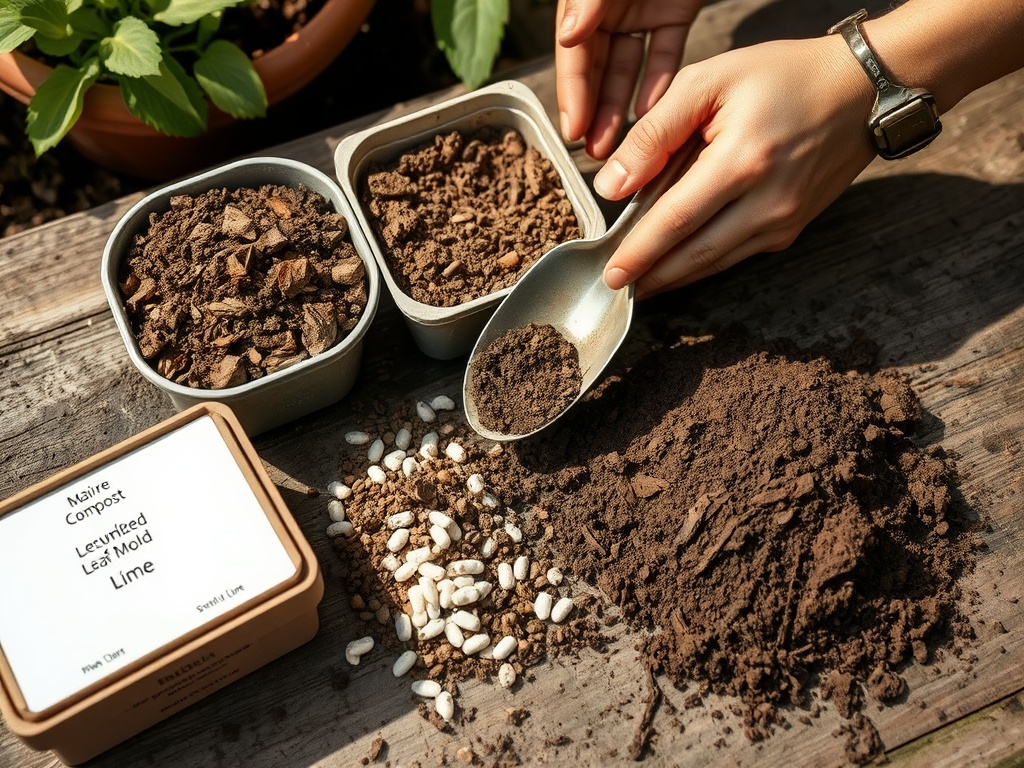
Leaf mold, shredded leaves, and other well-decomposed leaf materials are useful when the main goal is better soil structure and moisture buffering rather than a strong nutrient boost. They can work particularly well in ornamental beds and around perennials. Fresh, thick layers of intact leaves may mat together, so shredding or pre-composting generally makes them easier to manage.
Organic surface mulches also help protect soil between amendment cycles. University of Minnesota Extension describes how organic mulch can reduce evaporation and add organic matter as it breaks down in its mulching guidance. That approach pairs well with the site’s broader article on building a pollinator-friendly backyard because many habitat plants benefit from stable moisture and protected soil.
Use pH Amendments Only With Evidence
Lime and sulfur are not general soil conditioners. They are tools for changing pH. If the soil test shows that pH is outside the preferred range for the plants you want to grow, the laboratory or local extension service can recommend an application rate based on soil type and target pH.
Adding lime because a neighbor uses it, or sulfur because a plant “likes acidic soil,” can create a new problem. Different soils resist pH change differently, and different plants tolerate different ranges. Follow the recommendation for the actual bed rather than a generic online rate.
Why Gypsum Is Often Misused
Gypsum supplies calcium and sulfur and has valid agricultural uses, including particular sodic-soil conditions. It is frequently promoted as a universal cure for clay, but ordinary clay soil is not automatically improved by adding gypsum. If compaction is the problem, limiting foot traffic, adding organic matter, keeping soil covered, and avoiding cultivation when wet are usually more broadly applicable practices.
A good amendment plan fixes the cause rather than chasing soil texture with repeated products. That same principle applies to weed management: the site’s comparison of pre-emergent and post-emergent weed control emphasizes matching the treatment to the stage of the problem.
A Simple Improvement Sequence
1. Sample the bed and obtain a soil test before making major pH or nutrient changes.
2. Observe drainage after rain and check for compaction when the soil is moist rather than saturated.
3. Add finished compost or another organic amendment if the test and soil condition indicate low organic matter.
4. Apply lime, sulfur, fertilizer, or other targeted products only at recommended rates.
5. Cover the soil with an appropriate organic mulch to reduce surface drying and erosion.
6. Reassess plant performance over a growing season instead of applying a second round immediately.
Avoid working wet clay aggressively. Tilling or digging saturated soil can destroy aggregates and create clods that remain hard after drying. Also avoid burying large amounts of undecomposed wood chips in annual beds; surface mulch and incorporated amendments behave differently in soil.
Build Better Soil Deliberately
The best amendment is the one that solves a measured or clearly observed problem. For many beds, that means starting with compost and better surface protection, then using test-directed materials only where needed. A slower, evidence-based approach usually produces a more stable root zone than frequent product changes.
As a next step, document the bed’s drainage, pH, organic matter result, and the amendment you applied so you can compare plant performance over the next season rather than relying on memory.
Educational note: Home and garden information is provided for educational purposes only. Soil conditions, fertilizer rules, and amendment recommendations vary by location and crop; consult a local extension service or qualified horticultural professional when site-specific advice is needed.